
Diana London Denies $4.5m Payment For Tinubu Interview, Says 'Smear Campaign Can't Change The Facts'
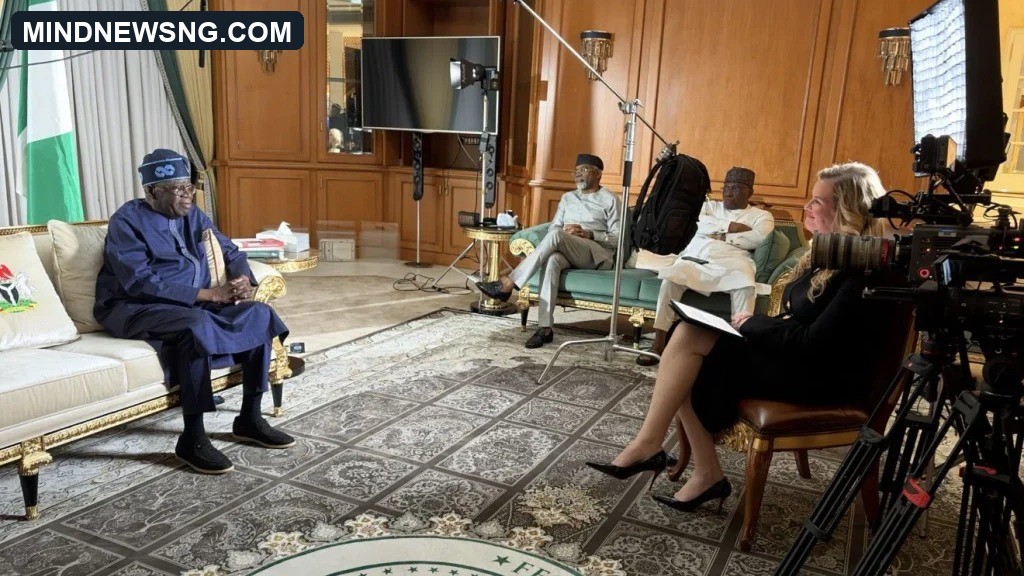
The American strategist says the Nigerian government never paid her for her interview with President Tinubu, after Atiku Abubakar cited US filings linking her to a firm on a $4.5m retainer.
American political strategist Diana London has denied receiving $4.5 million from the Nigerian government in connection with her interview with President Bola Tinubu, calling the allegation a smear campaign.
London responded on X on Wednesday night, three days after the interview was recorded at the Presidential Villa in Abuja.
What she said
“I unequivocally deny the claim that Nigeria’s government nor anyone else in Nigeria paid me $4.5 million,” she wrote. “I went to Nigeria to interview President Tinubu @officialABAT for parts of a documentary and see Nigeria for myself.”
She added: “This SMEAR CAMPAIGN can make noise, but can’t change the facts or stop me from speaking the truth.”
That is the first direct answer from London since the payment claim began circulating. It does not address the specific documents Atiku Abubakar cited, and it does not explain why her earlier posts about the trip were deleted.
What Atiku is asking
Former Vice-President Atiku Abubakar opened the issue on Wednesday through a statement released by his Director of Strategic Communication, Phrank Shaibu. He asked the Presidency to explain whether the interview was connected to a lobbying engagement between Abuja and a United States firm.
Atiku said the US filings list London as a consultant to DCI Group AZ, a firm reportedly retained by the Nigerian government through Aster Legal, and that those filings show a $4.5 million retainer.
He wants four things made public:
- The contract itself, and the details of the payment.
- The complete, unedited recording of the interview.
- The identity of whoever approved the reported payment.
- The source of the money, and whether taxpayers’ funds were used.
His argument is simple: Nigerians are entitled to know whether the Villa interview was an independent media engagement or a publicity exercise paid for by the government.
The posts that disappeared
The controversy grew because of what London published before the denial. She wrote posts praising security cooperation between Nigeria and the United States under Tinubu and President Donald Trump, describing Nigeria as America’s greatest ally in Africa and suggesting the partnership could strengthen trade.
She also acknowledged working with people involved in improving relations between Abuja and the Trump administration. Those posts were later deleted, and the comment section of her X account was restricted after Nigerian users flooded it.
Deleting the posts did not quiet the story. It sharpened it — because the posts were the clearest public evidence of the very relationship Atiku is asking the Presidency to explain.
What the Presidency has said
Nothing, publicly. As of Thursday, the Presidency had not answered Atiku’s questions or said whether the interview was connected to the reported lobbying arrangement.
That silence is now the story as much as the money. A one-paragraph statement — either confirming or denying a government contract with DCI Group AZ — would end the speculation. Instead the government has left a denial from a private American consultant as the only official-sounding word on the matter.
Why it lands in Nigeria now
The interview was not an isolated media booking. It came in the middle of a sensitive stretch in Nigeria–US relations: Washington redesignated Nigeria a Country of Particular Concern over religious violence, American officials have been watching the run-up to the 2027 election, and security cooperation has become a bargaining chip between the two governments.
In that environment, an interview granted to an American strategist who is simultaneously reported to be on a lobbying retainer raises an obvious question about where journalism ends and public relations begins. The answer matters well beyond this one interview.
What happens next
Three things will settle it. Atiku has demanded the unedited recording — if it is released, the public can judge the interview on its content. The US lobbying filings are public documents and can be read directly. And the Presidency can either confirm or deny the contract.
Until at least one of those happens, the claim and the denial will both stand, and Nigerians will be left weighing a strategist’s word against her own deleted posts.
Source: statements by Diana London on X and by Atiku Abubakar’s media office; US lobbying filings cited by the former vice-president.
Rooted & Praying — The Christian Parenting Guide for the Digital Age
Scripture, prayer and calm answers for 18 digital-age parenting situations — now with a launch discount.
View the Book →Related Articles

Becoming SAN remains my proudest professional moment – Ex-NBA president, Osigwe
Elections not do-or-die contest – Akpabio
Bandits threaten to stop 2027 elections in Zamfara communities
