Revealed: Countries With the Highest Cousin Marriage Rates - Check Below For Full Details
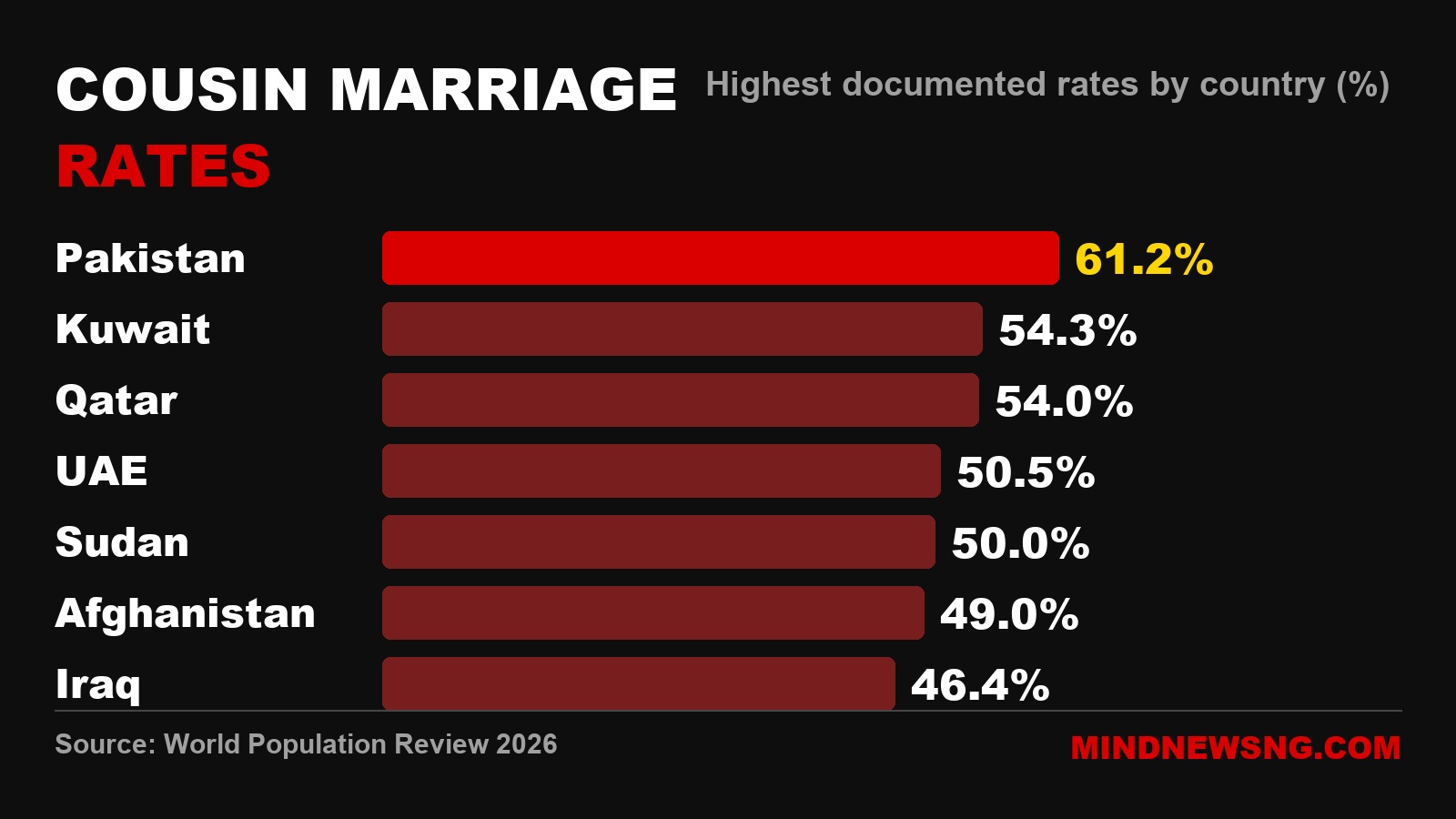
Research documents the countries where cousin marriage is most common - Pakistan leads at about 61%, followed by Kuwait, Qatar and the UAE. Here is what the data shows, why the practice persists, what health experts advise, and why the conversation should stay respectful rather than mocking.
Marriage between cousins - known in research as consanguineous marriage - is legal and culturally accepted in many societies around the world. But the rates vary enormously by country, and new data compiled by World Population Review (2026) shows a clear pattern.
The countries with the highest documented rates
- Pakistan - about 61% (some studies put it near two-thirds of all marriages)
- Kuwait - 54.3%
- Qatar - 54%
- United Arab Emirates - 50.5%
- Sudan and South Sudan - about 50%
- Afghanistan - about 46-49% (a study of eight provinces found 46.2%, ranging up to 51.2% in Bamyan)
- Iraq - about 46.4%
- Mauritania - about 47.2%
Why the practice persists
A 2024 study in Population and Development Review, using the Punjab Consanguinity Survey, found that cousin marriage in Pakistan is sustained by strong kinship economics - keeping land and wealth within the family, trust between families, and clan endogamy - alongside high fertility rates that keep a large pool of eligible cousins. The likelihood of cousin marriage falls with education, co-education and rising economic development, which is why rates have dropped sharply in countries that developed faster.
What health experts say
Repeated cousin marriage across generations increases the chance that couples share inherited gene variants, and studies link it to higher risks of congenital disorders and infant mortality - one UK study found double the normal infant mortality among South Asian infants, largely due to congenital anomalies, and research in Pakistan has connected the practice to increased rates of blood disorders such as thalassaemia.
Health bodies therefore recommend genetic counselling before marriage for cousins who plan to marry - screening that can identify inherited risks without any judgment about the relationship itself. Many countries with high rates now run national premarital screening programmes.
The Nigerian context - and why mockery is the wrong response
Cousin marriage also exists among some Nigerian communities, and in a country as diverse as Nigeria the practice - and the health conversation around it - varies by region and tradition. What the research supports is education, counselling and voluntary screening, not ridicule. Stories like this trend on social media mostly as ammunition to mock particular ethnic or religious groups - and that is exactly the wrong takeaway. The findings apply across many countries and cultures.
This article is for general information only and is not medical advice. Couples with a family blood relationship who are planning marriage should speak to a doctor or genetic counsellor for guidance specific to their situation.
Sources: World Population Review (Inbreeding by Country, 2026); Population and Development Review, “Why Pakistan has the Highest Rates of Cousin Marriage in the World” (2024); PubMed - Consanguineous marriages in Afghanistan; BBC and UK Born in Bradford cohort studies; WHO guidance on community genetics.
Rooted & Praying — The Christian Parenting Guide for the Digital Age
Scripture, prayer and calm answers for 18 digital-age parenting situations — now with a launch discount.
View the Book →