AI-powered fraud threatens telecom security, banking – NCC
The Nigerian Communications Commission has warned that the growing use of artificial intelligence by cybercriminals poses significant threats to Nigeria’s telecommunications infrastructure, banking system and national security. The Executive Vice-Chairman of the NCC, Dr Aminu Maida, raised the
The Executive Vice-Chairman of the NCC, Dr Aminu Maida, raised the alarm on Tuesday at the second International Cybersecurity Conference in Abuja, where he said AI-powered attacks were becoming increasingly sophisticated and capable of compromising digital networks and financial transactions.
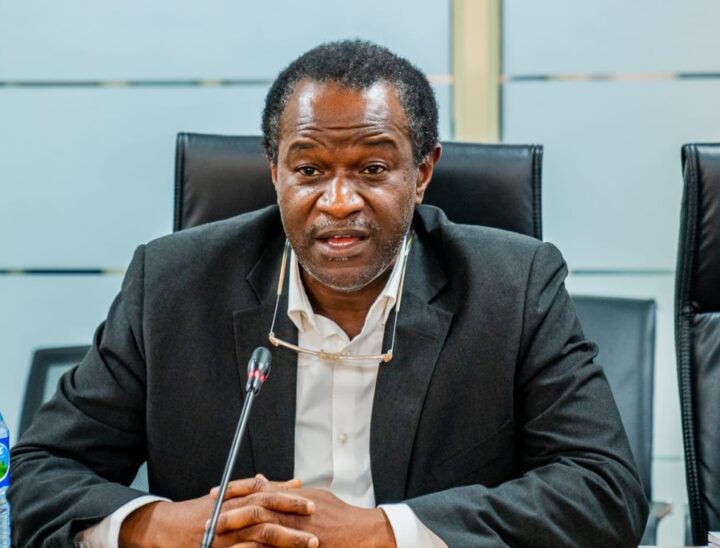
Maida, represented by the commission’s Executive Commissioner for Technical Services, Sunday Oshadami, said, “We now face AI-driven phishing tailored to individuals, automated credential attacks, deepfakes designed to bypass multi-factor authentication, and malware that rewrites itself to evade detection.”
Maida explained that telecommunications had become central to Nigeria’s digital economy, supporting banking transactions, business operations, public services and communications.
He warned that attacks targeting telecom operators could consequently disrupt other critical sectors.
“An attack on a telecom provider is an attack on the financial sector, national defence, and civil governance,” he stated.
According to him, artificial intelligence has transformed cybercrime by enabling attackers to identify vulnerabilities and execute sophisticated operations faster than conventional security systems can respond.
“We are no longer defending against human hackers operating at human speed; we are confronting machine learning systems operating at microsecond computational speed,” Maida said.
He cited reported cyberattacks on supermarket refrigeration systems in France and a spyware campaign targeting at least 45 devices belonging to journalists and media personnel in the Middle East between 2024 and 2025 as examples of emerging threats.
The NCC boss said Nigeria’s designation of telecommunications infrastructure as Critical National Information Infrastructure reinforced the need to protect networks against cyberattacks.
He disclosed that the commission had established a Computer Security Incident Response Team to monitor threats, coordinate intelligence sharing and enforce incident reporting.
He added that the NCC had rolled out a Cyber Resilience Framework establishing common security standards for licensed telecommunications operators.
Maida urged operators to adopt zero-trust security systems, continuously audit AI models for vulnerabilities and develop networks capable of recovering from attacks without prolonged service disruptions.
The Director-General of the National Information Technology Development Agency, Kashifu Abdullahi, said cybercriminals were increasingly exploiting human vulnerabilities rather than attacking technological systems directly.
Abdullahi disclosed that NITDA was collaborating with the Office of the National Security Adviser and the National Assembly on reviewing the Cybercrime Act, while exploring a national cybersecurity architecture and strengthening digital sovereignty.
The Attorney-General of the Federation and Minister of Justice, Lateef Fagbemi, represented by the Director of Public Prosecutions, Rotimi Oyedepo, disclosed that the ministry was developing legislative reforms to address emerging cyber threats.
Fagbemi said the proposed legislation would improve electronic evidence management, investigations and prosecutions while protecting fundamental rights.
The Chairman of the Senate Committee on ICT and Cybersecurity, Shuaib Salisu, proposed a national cybersecurity resilience index to assess organisations’ preparedness against cyber threats.
He also advocated stronger collaboration among government agencies and greater regional cooperation on digital security.
The post AI-powered fraud threatens telecom security, banking – NCC appeared first on Punch Newspapers.
Related Articles

ANALYSIS: The criminalisation trap in Africa’s responses to artisanal mining
Delta gov signs 13th-month salary, four others into law
NELFUND moves to stop students collecting loans while parents pay fees